When you, as a parent, have to choose the best international schools in China, the process usually begins with a conversation with your colleague or a review from friends and family. It then turns into searching on the internet, which needs even more careful thought.
To choose an international school in China, look for WASC-accreditation, as it is often one of the quickest ways to narrow down our choices. The Western Association of Schools and Colleges (WASC) is a world-renowned accrediting association that works closely with the Office of Overseas Schools under the U.S. Department of State. It gives you some reassurance about the school’s standards of being a global school. Apparently, after enrolling kids in WASC-accredited international schools, parents see improvement in kids’ fluency in English, strong conceptual understanding of subjects like science and maths, and updated information about current world affairs. Over time, they also learn how to adjust to new settings and stay comfortable in groups that aren’t exactly like them.
Fun Fact: Around 68% of international school graduates in China attend universities in the U.S., U.K., Canada, or Australia, according to a 2023 study by the International Schools Database.
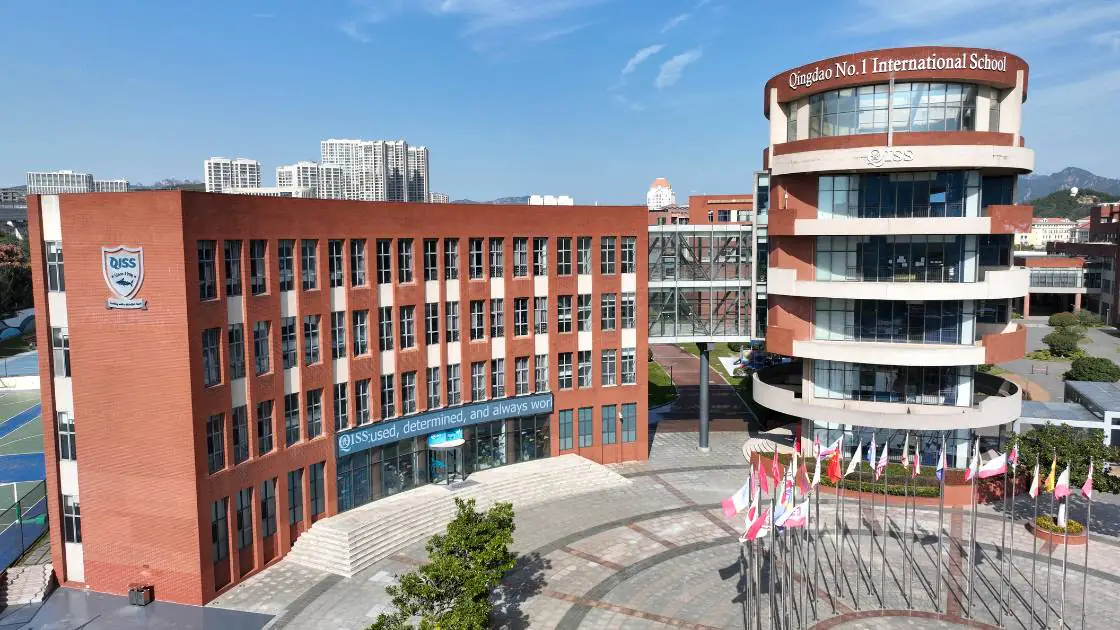
As one of the best WASC-accredited international schools in Qingdao, China, QISS further suggests considering three factors to guide you thoroughly in your decision: the curriculum that lays the foundation, the co-curricular activities that support growth, and the staff expertise to harness the right knowledge. QISS is one of the top choices for families seeking a smooth path toward overseas study or consistency during a move to China. It provides a steady bridge offering a global outlook without disconnecting students from the context they live in each day.
If QISS is on your shortlist, feel free to contact our admissions team for a simple, clear look at how our learning environment supports students each day.
Top Three Factors of a Good International School in China
When you want to choose the best international schools in China, jump straight into comparing curriculums or asking other parents what they recommend. But there’s another layer many of us don’t notice at first: schools that teach an international curriculum should also follow government rules. The new regulatory landscape for international schools in China shapes how the school handles teaching, activities, and even who they hire. Knowing a bit about these rules helps you understand why some schools run more smoothly than others.
#1 Choose an International School Following a Curriculum That Builds the Global Foundation
International schools in China don’t all have the same curriculum. Knowing the different curriculum helps you understand which international school might suit your child.
Western Curriculum Schools
These schools follow systems from countries like the US, UK, Canada, or Australia. They often feel familiar to expat families because:
- Classes are taught mainly in English
- The early childhood curriculum matches what children would learn back home.
- Students can prepare for exams like the SAT, ACT, and A-Levels
- High school curriculum may offer AP, IB, or iGCSE pathways.
This curriculum works well for families who want smooth transitions between countries.
International Baccalaureate (IB) Schools Curriculum
IB schools operate under the IB framework, which emphasizes inquiry, critical thinking, and global awareness.
- The program is recognized worldwide.
- It’s ideal for families who move often.
- Universities see the IB Diploma as strong preparation.
- Students need a good level of independence and time management.
Bilingual or Chinese-International Hybrid Schools Curriculum
These schools combine Chinese national curriculum requirements with international teaching methods.
- They usually enroll many Chinese nationals.
- Children learn in both Mandarin and English.
- Grades 1-9 middle school students must follow the Chinese national curriculum.
- Grades 10-12 may offer AP, IB, or A-Levels, but must also include core Chinese subjects.
This curriculum suits families who want global exposure while keeping a strong connection to Chinese academics and culture.
Give your child a school where global learning and cultural values grow together.
International Schools like QISS that enroll only foreign passport holders have far more flexibility in designing their international curriculum. These schools can use American, British, IB, or other international programs without being required to add the Chinese national curriculum. Their main restriction is about who they can admit, not what they can teach. On the other hand, schools that serve Chinese nationals must follow a different set of rules. In Grades 1-9, they must teach the full Chinese national curriculum and cannot use foreign textbooks. In Grades 10-12, they’re allowed to add international programs like AP, IB, or A-Levels, but they still need to include subjects such as Chinese politics, history, geography, and Chinese language, and Chinese teachers must teach these. Before selecting the school for your child:
Think about where your child might study later.
Ask how the school challenges students.
Check how the school supports university applications.
Now, if you look at all of this and then look at QISS, the pieces line up steadily. QISS follows a U.S. curriculum based on Common Core, and older students can take a wide mix of AP courses. Younger children learn through play and exploration, a Reggio Emilia-inspired approach, which works naturally for early learners. As students grow, they move into more inquiry-style work, STEM projects, language learning in both English and Chinese, arts, sports, and plenty of after-school options.
#2 Choose an International School where Co-curricular Activities Shape Confidence
Schools aren’t just about what happens during class time. Co-curricular activities at an international school give your kid space to explore interests, develop skills, and figure out who they are outside of academics.
- Required activities: All schools in China, including international schools, should provide physical education classes and daily physical activity time. This isn’t a nice-to-have-it’s mandated.
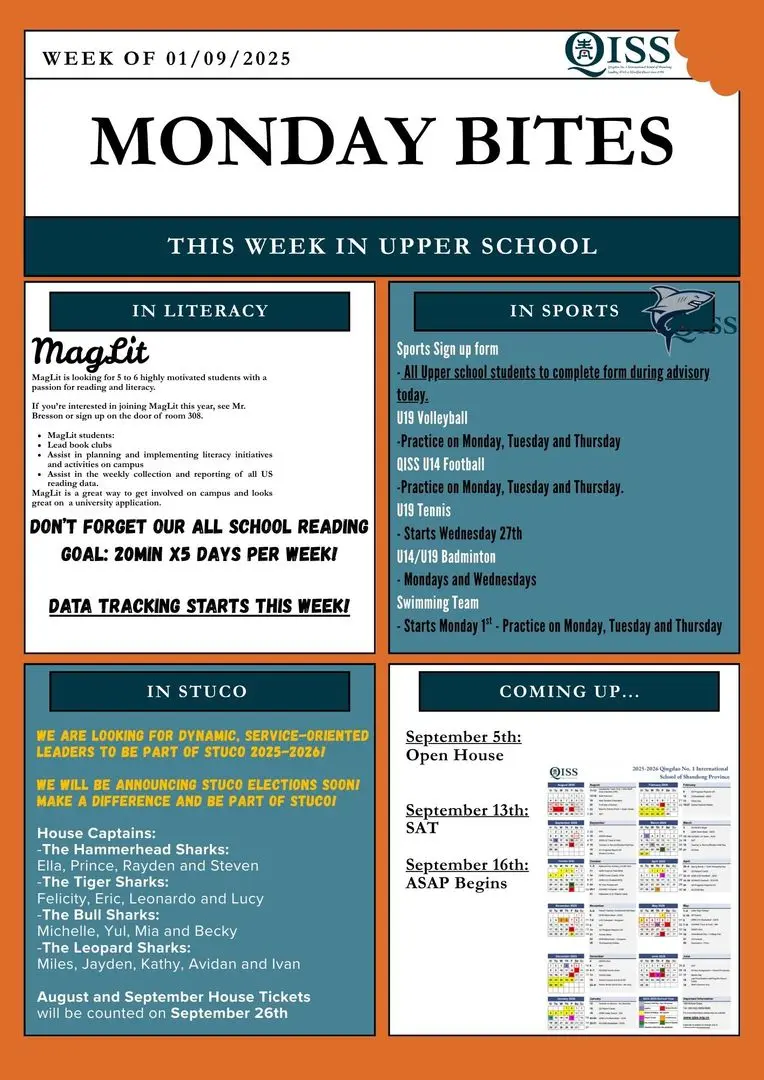
- Sports programs: An International school that has good sports teams like basketball, football, and volleyball, plus individual options like swimming, tennis, and track, ensures the overall growth is supported.
- Arts and creativity: Music, drama, visual arts, and performance fine arts activities are part of the international school’s daily activities, allowing students to express themselves and build creative confidence.
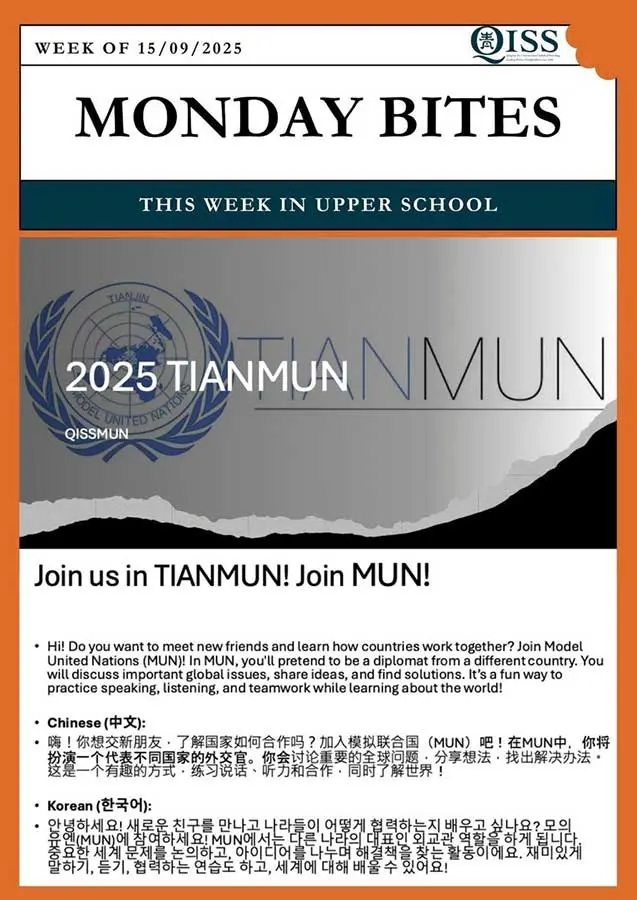
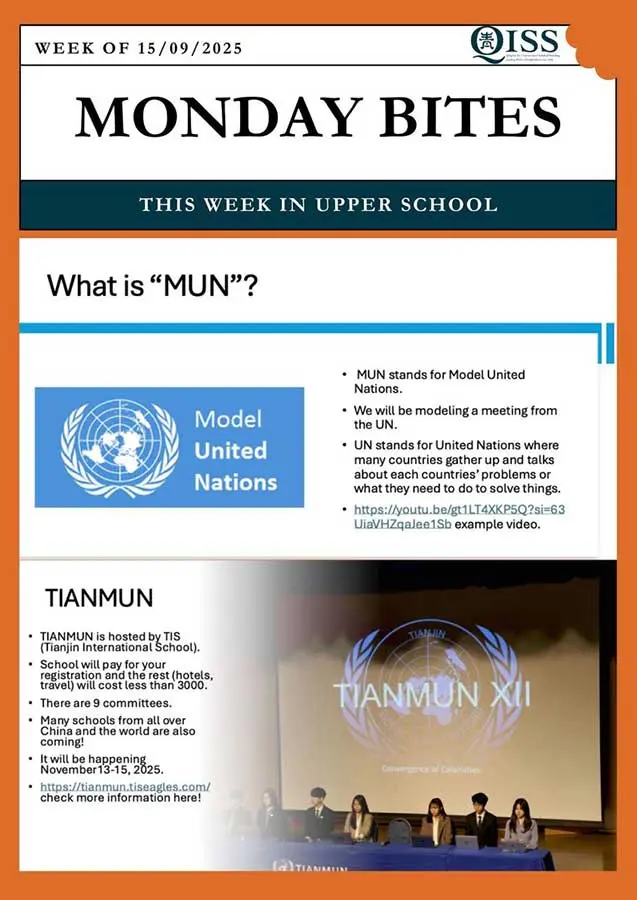
- Academic clubs: Model United Nations (MUN) is particularly popular at international schools, giving students hands-on experience with diplomacy, public speaking, and global issues through simulated UN conferences. Beyond MUN, look for debate teams, robotics clubs, coding programs, science olympiads, and math competitions that extend learning beyond textbooks and build real-world skills.
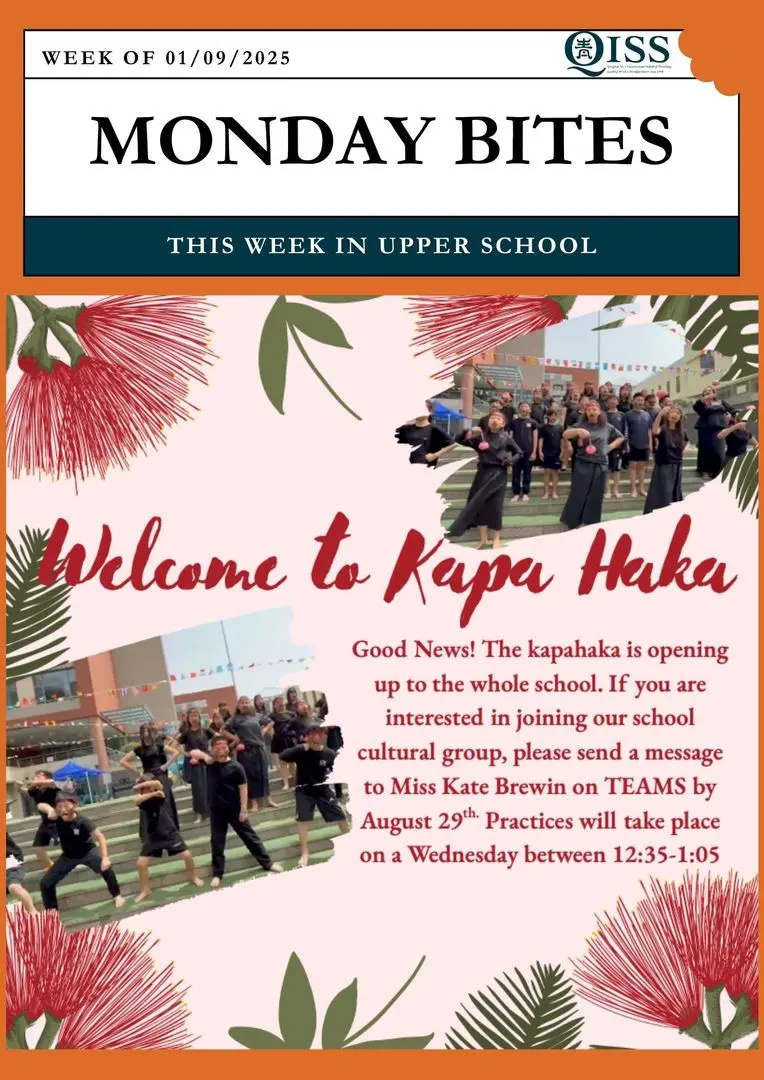
- Cultural activities: Schools encouraging your kids to join Language clubs, cultural celebrations, and international day events help them appreciate diversity in meaningful ways.
Research by the Association of International Schools in Asia shows that students who participate in at least two extracurricular activities are more engaged, have stronger friendships, and manage their time better. Activities aren’t extras; they’re part of what makes education complete.
#3 An international school Where Teachers with International Backgrounds and Expertise is Better
Teachers are what make or break an international school. Their qualifications, experience, and commitment have a direct impact on whether your child actually learns.
- Credentials: Faculty in global schools usually have bachelor’s or master’s degrees in education or specific subject areas, plus teaching licenses from their home countries.
- Experience: International schools hire teachers with at least five years of classroom experience, ideally in international settings.
- Retention: If more than 20% of teachers leave every year, that’s a red flag. High turnover disrupts learning and usually signals bigger problems. Research shows that schools with lower teacher turnover consistently see better student outcomes and higher parent satisfaction. Stability matters. When teachers stay, students benefit.
- Professional development: Good international schools invest in ongoing teacher training, curriculum updates, and improving how teachers teach.
- Cultural understanding: Through the Mindful Heart philosophy, the QISS school nudges students toward habits like being compassionate, honest, open to others, and creative values that fit comfortably with both global expectations and what’s important here in China. And because we hire teachers and counselors who already know how to support children from different backgrounds, students get help not only with schoolwork but with day-to-day life as well.
When you look at it all together, the rules, the curriculum, the activities, the staff, each international school forms its own identity. Seeing how these practical factors work will make it easier for you to picture what life might look like for your child.
FAQs on Choosing an International School in China
Many expat families, including Koreans, face a few common hurdles: understanding language expectations, adjusting to cultural norms that differ from their home country, and finding available seats in popular schools. These challenges are normal and can be managed with early planning.
Most schools list their accreditations clearly on their website. If you want extra reassurance, you can cross-check through recognized bodies such as WASC, CIS, NEASC, or the International Baccalaureate Organization. A quick email or phone call to the school also works.
Annual Tuition fees for international schools in China can be somewhere from USD 10,000 to USD 50,000 per year, or(70000RMB -350000 RMB), depending on the city and the school. Parents should be prepared to pay for additional costs such as application fees, transportation, uniforms, meals, and some extracurricular activities.
QISS offers ESL/EAL programs from small-group support to in-class assistance to help students who are not fluent in English.
Start by organizing their academic records and checking language requirements. It also helps to explain how the new curriculum works and gives them time to get familiar with the school environment. A short tour or meeting with teachers can ease the adjustment.
Look Out for Eligibility and Practical Realities Before Finalizing an International School in China
Even when an international school feels right academically and culturally, a few practical tips can shape your final decision.
1. Check the Eligibility Rules: International schools in China don’t all enroll the same students. Expat-only schools admit foreign passport holders only; parents typically need valid work visas. Bilingual schools accept Chinese nationals but must follow national curriculum requirements. Open-enrollment schools admit mixed nationalities, though policies depend on local licensing. It’s wise to confirm eligibility early so you don’t spend time on an international school that legally can’t admit your child.
If your child holds a foreign passport and your family is seeking holistic, global learning, consider QISS.
2. Language Expectations: Most international schools expect a certain level of English, especially from middle school onward. Schools often assess English through interviews or placement tests.
Students who need support in English may join our QISS ELL program.
3. Mid-Year Admissions: Families moving mid-year often face limited openings, as not all schools accept mid-year transfers due to class capacity or course progression. Some grades, like kindergarten, Grade 6, and Grade 9, fill up fastest.
Schools with structured orientation and pastoral care usually make transitions smoother.
4. Evaluate School’s Environment and Facilities: Facilities such as science labs, swimming pool, libraries, art rooms, and other sports spaces should be well-structured and maintained. Pay attention to safety practices, including how the school monitors entry, supervises outdoor areas, and handles emergencies. Even simple observations like cleanliness, natural light, noise levels, and how teachers interact with students can tell you a lot about whether the environment supports meaningful learning and student well-being. These small indicators often reveal more about a school’s daily reality than any brochure or website can.
Schools with structured orientation and pastoral care usually make transitions smoother.
5. Consider the Location and Accessibility of the International Schools: When you’re comparing international schools, it helps to think practically about location and daily accessibility. A long or complicated commute can add stress to the entire family, especially for younger children who may already be adjusting to a new environment. Try to look at the route during typical school hours to see how traffic flows and whether transportation feels reliable. Also consider how close the school is to your home or workplace, and whether after-school activities or late pickups will be manageable. A school may look perfect on paper, but if the daily travel feels draining or unpredictable, it can affect your child’s overall experience more than you expect.
Understanding WASC Accreditations: A Smart Shortcut for Parents to Find an International School in China
QISS holds WASC (Western Association of Schools and Colleges) accreditation, which serves as a reliable shortcut when you’re evaluating international schools. Here’s why this matters:
Accreditation isn’t just a certificate hanging in the office-it’s proof that independent education experts have thoroughly examined the school and verified it meets rigorous standards.
When a school is WASC accredited, it means external reviewers have confirmed that qualified, credentialed teachers are in the classroom, the curriculum is properly aligned with recognized educational standards, student learning is actually happening (not just promised), and the school has adequate facilities, resources, and support systems in place.
The accreditation process is intensive. Schools undergo months-long self-studies, host multi-day site visits from trained evaluators who observe classes and interview teachers and students, and must address any identified weaknesses or risk losing their status.
Accreditation gets renewed every few years, which means schools can’t rest on past achievements; they have to maintain standards continuously.
For parents, choosing an accredited international school like QISS is genuinely the smarter way to make this decision. Instead of trying to verify every single element yourself, teacher credentials, curriculum quality, learning outcomes, and safety protocols, the accreditation has already done that verification work for you. If an international school has earned and maintained accreditation, it’s a strong signal that the fundamental pieces are in place and being held to account.
In Conclusion - A Future Built on Balance
While choosing an international school, include your child gently in the decision, especially once you’ve narrowed the options. You don’t need them to make the choice, but hearing their thoughts gives you insight into what helps them feel comfortable and supported. A short campus visit, a conversation about what they value in a classroom, or even observing how they respond to a school’s environment can be enough. Children often notice things adults overlook, and involving them in a simple, age-appropriate way can make the transition smoother and help them feel more prepared for the change.
QISS can help your child grow beyond boundaries, speak across cultures, think beyond limitations, and remain connected to where they come from. It is not just about entering a foreign university; it is about entering a brighter future with confidence, identity, and global awareness.